Tag categories

Each tag must be associated with a tag category.
Tag categories are an organisational tool — they help you group and structure your tags in a way that makes sense for your business. You can create as many categories as you need, and assign each one a colour for identification purposes.
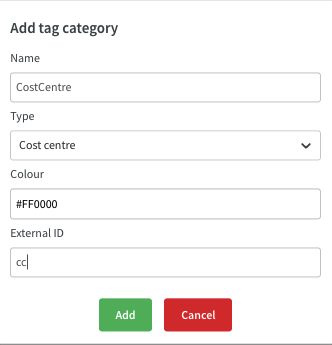
Tag category type descriptions
- Tag category type: This specifies the type of information the tag can hold:
- Cost centre, Project, and Account Use these to signal the business purpose of the tags grouped under the category — for example, tags that represent cost centre codes, billable project codes, or account codes. The label you choose helps other administrators and managers understand the intent behind the tags at a glance.
- Extended Use this for tags that represent anything outside of financial coding — for example, physical resources like rooms or vehicles, client contracts, specific locations, or any other operational concept you want to track against shifts. It's a flexible option that works well when your tags carry a broader business meaning.
- Color: Provides a visual cue indicating which tag category a shift is associated with.
- External Identifier (External ID): Used for integrations to uniquely identify the tag category.
Which category type should I choose?
Not sure which category type to pick? Choose the label that best describes the purpose of the tags in that category. Financial codes for payroll or integrations suit Cost centre, Project, or Account. For operational concepts like resources, contracts, or locations, Extended is the right fit.
- On the Account settings page, choose Tag categories, then click Add.
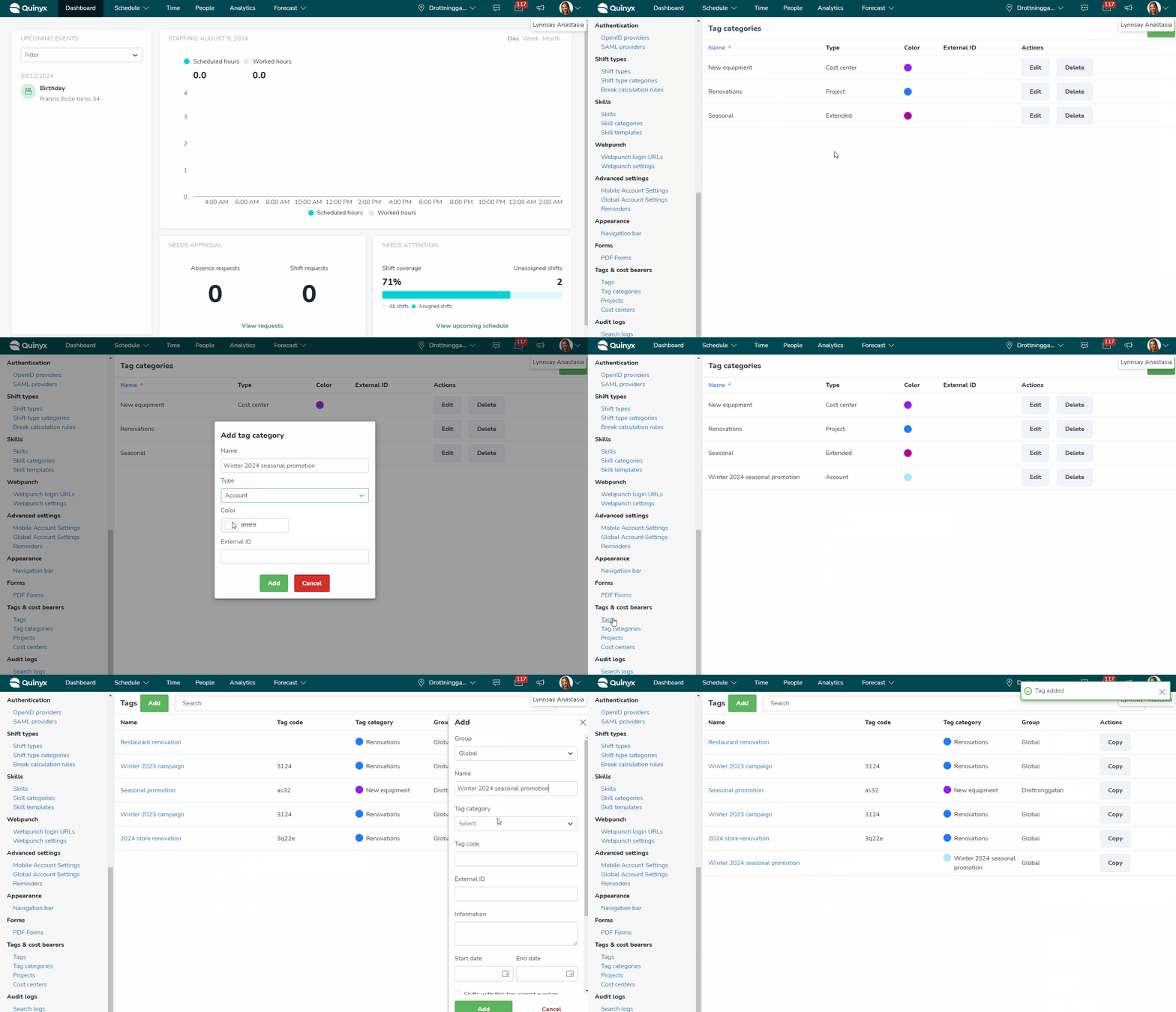
- In the Add tag category panel:
- Add the tag category name.
- Choose the type from the alternatives - Cost center, Project, Account, and "Extended".
- Select a color or add a HEX color code preceded by #
- Add the tag category external ID.