Advanced Analytics - Badges Dashboard
 Updated
by
Daniel Sjögren
Updated
by
Daniel Sjögren
Introduction
The Badges Dashboard gives you a complete view of how recognition is being shared across your organisation. It allows you to analyse who is sending badges, who is receiving them, which badge types are most commonly used, and how recognition activity evolves over time.
This dashboard helps leaders strengthen engagement by identifying recognition patterns, highlighting active contributors, and uncovering areas where encouragement may be needed.
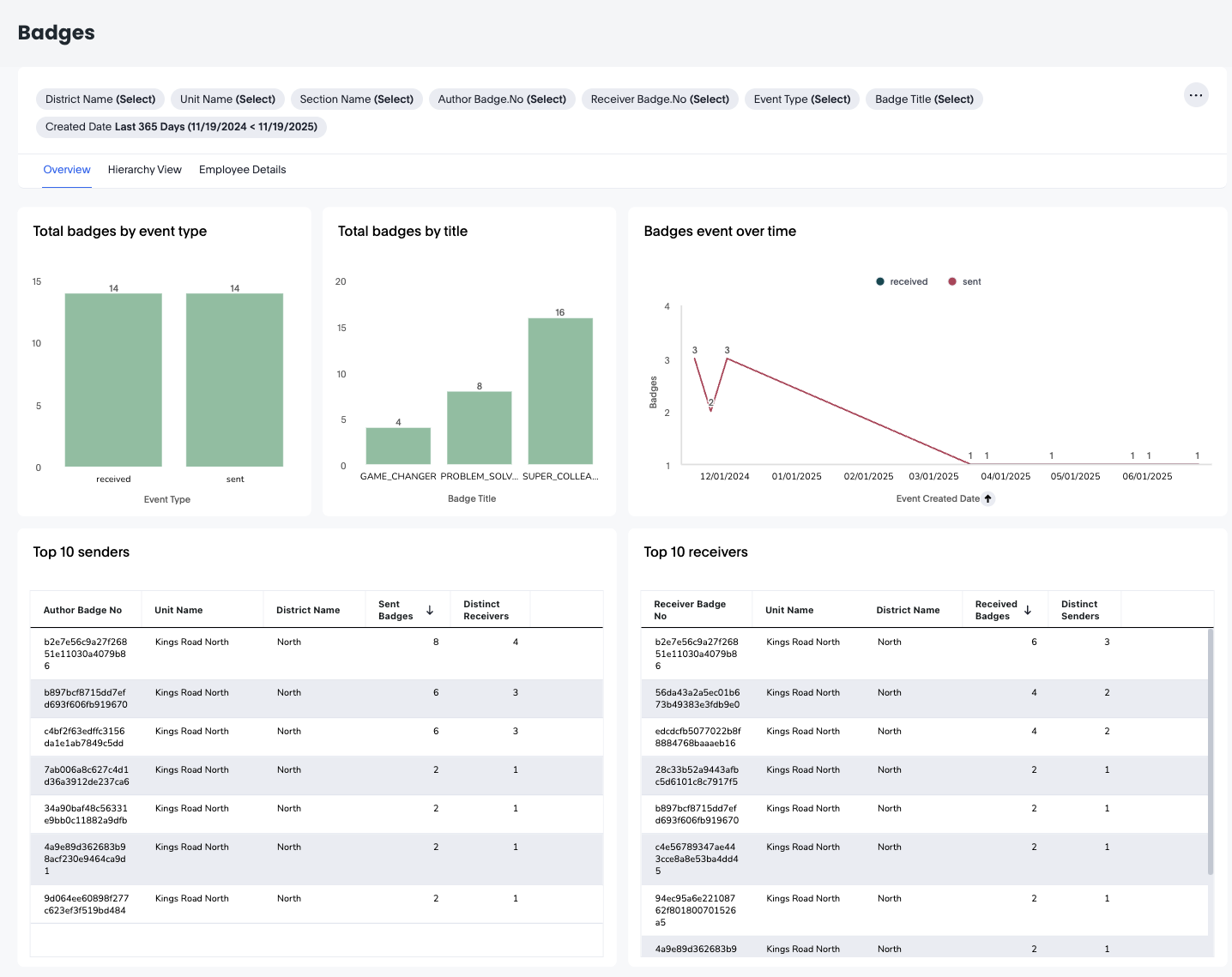
How it works
The Badges Dashboard is divided into three main tabs:
- Overview – a summary of all badge events, including senders, receivers, event types, and totals.
- Hierarchy View – badge activity organised by organisational structure (typically District → Unit → Section).
- Employee Details – a detailed breakdown of badge activity per employee.
All sections support filtering and export options, making it easy to analyse recognition trends at any level.
Overview Tab
The Overview provides a high-level perspective of all badge activity within the selected date range. It includes charts, top-lists, and key metrics.
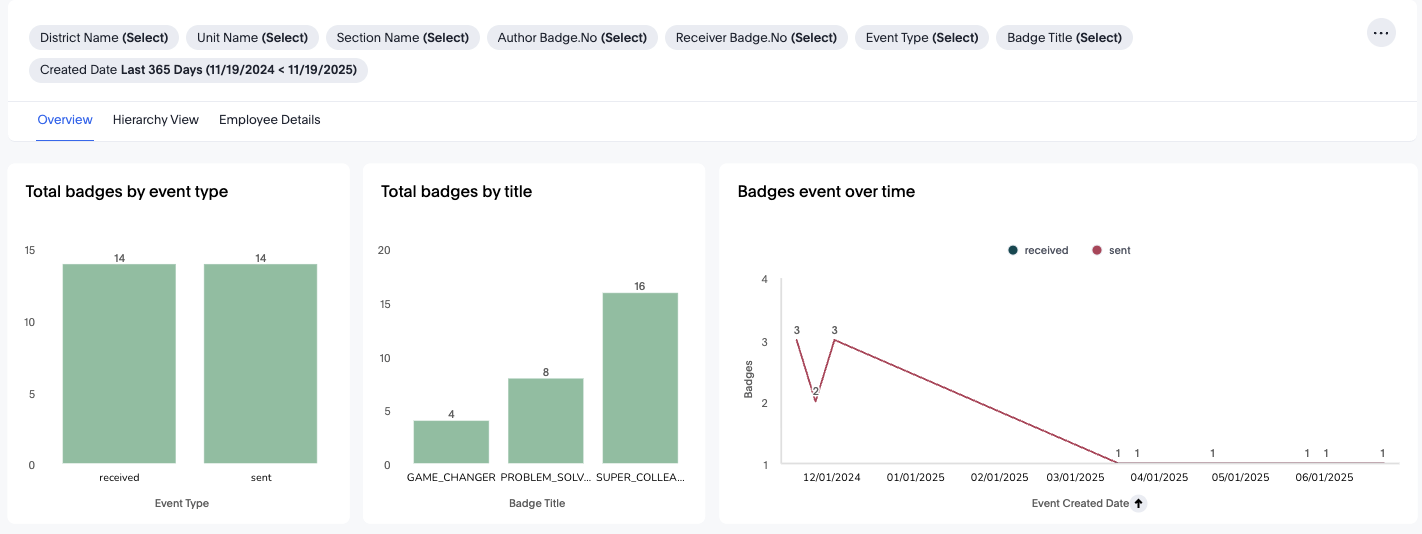
Charts and Metrics
Total badges by event type
Shows how many badges were received vs sent. This helps you understand overall recognition flow and whether employees are actively engaging.
Total badges by title
Displays the number of badges per badge type (e.g., GAME_CHANGER, PROBLEM_SOLVER, etc.). This reveals which behaviours or achievements are most frequently recognised.
Badges event over time
A time-based trend line showing the number of badges sent and received. Useful for identifying seasonal patterns, peaks in activity, or declines that may signal engagement drops.
Tables
Top 10 senders
Lists the employees who have sent the most badges. Columns typically include:
- Author Badge No
- Unit Name
- District Name
- Sent Badges
- Distinct Receivers
This helps you identify your organization's top recognition contributors.
Top 10 receivers
Lists the employees who have received the most badges. Columns include:
- Receiver Badge No
- Unit Name
- District Name
- Received Badges
- Distinct Senders
Useful for identifying highly recognised individuals or potential role models.
Hierarchy View Tab
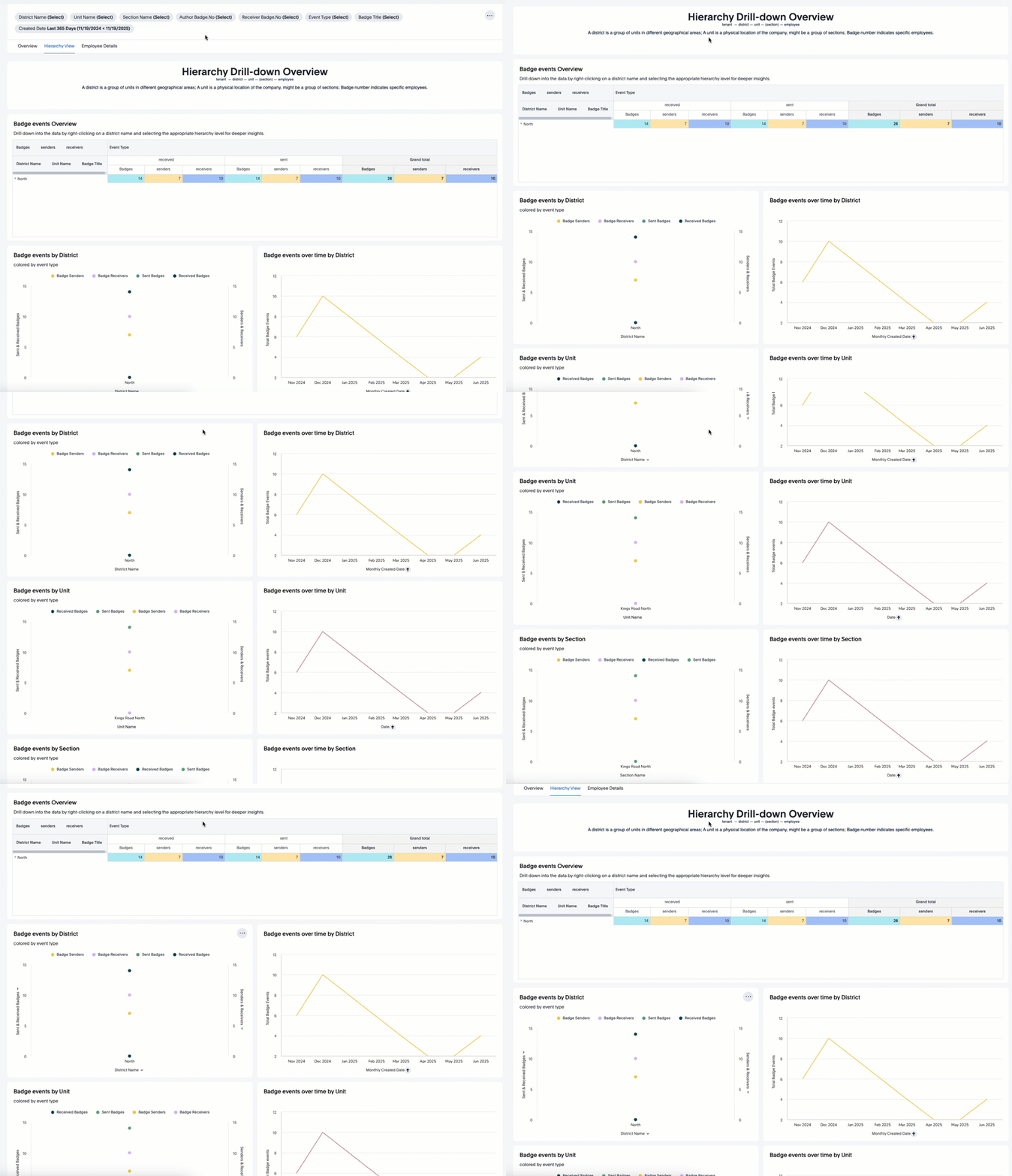
The Hierarchy View reorganises badge activity according to your company structure. For example:
- District
- Unit
- Section
This allows managers to:
- Compare recognition between organisational levels
- Assess which areas show strong engagement
- Identify parts of the organisation with declining or low recognition activity
- Support targeted engagement initiatives
This view is particularly useful for senior leaders, HR partners, and district or unit managers.
Employee Details Tab
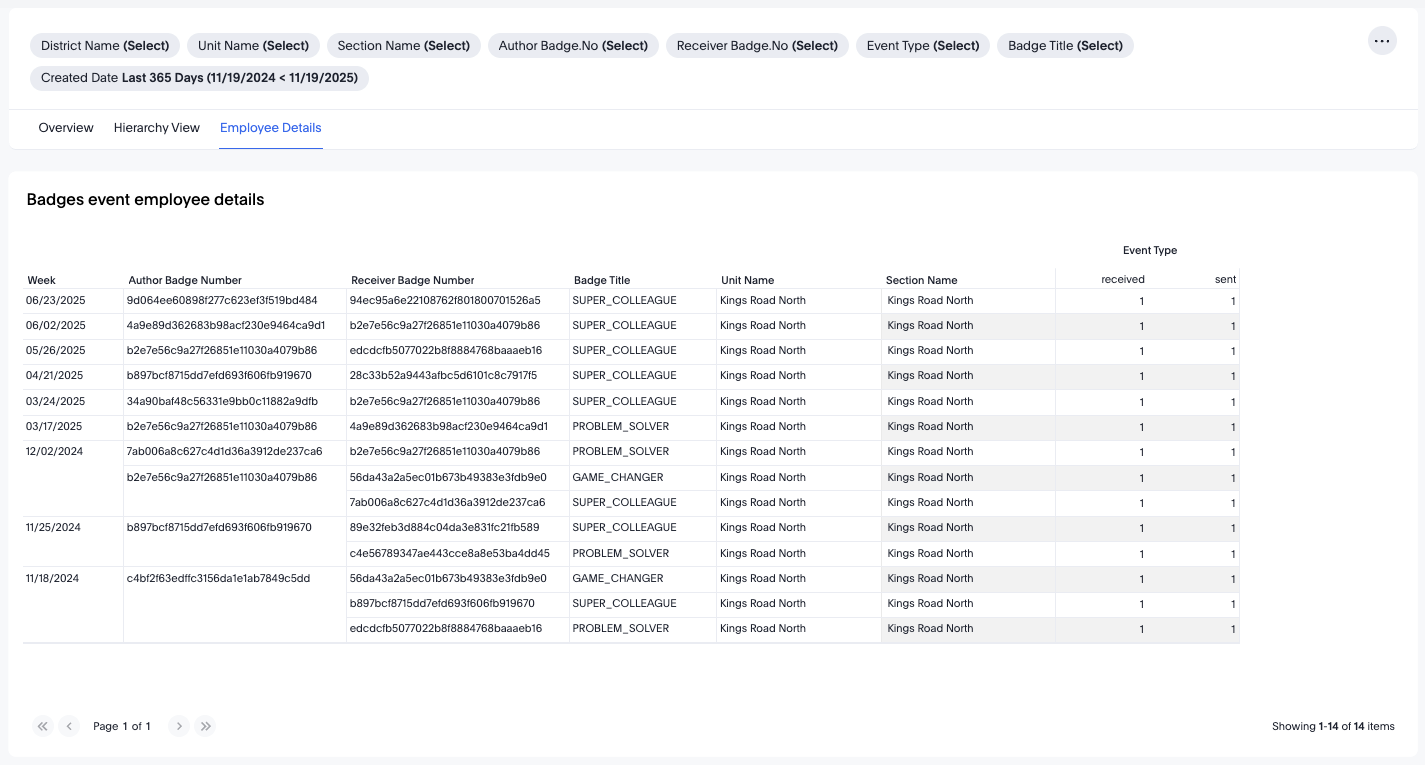
The Employee Details section provides a detailed view for each employee, including:
- Badges sent
- Badges received
- Badge titles
- Event types
- Distinct sender/receiver counts
This view supports:
- Employee-level recognition analysis
- Performance reviews
- Engagement check-ins
- Identifying employees who might benefit from more recognition
Practical Use Cases
- Track Recognition Participation
Identify which units or employees are most engaged in sending recognition. Highlight top contributors in meetings or internal communications.
- Identify Recognition Imbalances
If some employees send many badges but don’t receive them—or vice versa—you can investigate possible morale or inclusion gaps.
- Support Engagement Drives
Monitor badge activity after launching cultural initiatives, team events, or engagement campaigns.
- Assess Leadership Behaviour
Unit or district managers can be evaluated on whether they’re actively recognising their teams.
- Improve Review Conversations
Use employee-level data to support coaching discussions or performance reviews.
- Detect Under-Recognised Teams
Find units where badge activity is consistently low and provide targeted support.
Conclusion
The Badges Dashboard is a powerful tool for understanding and improving employee engagement through recognition. With its flexible filters, detailed views, and rich data exports, it empowers managers at every level to encourage positive behaviour, celebrate achievements, and maintain a culture of appreciation across the organisation.
